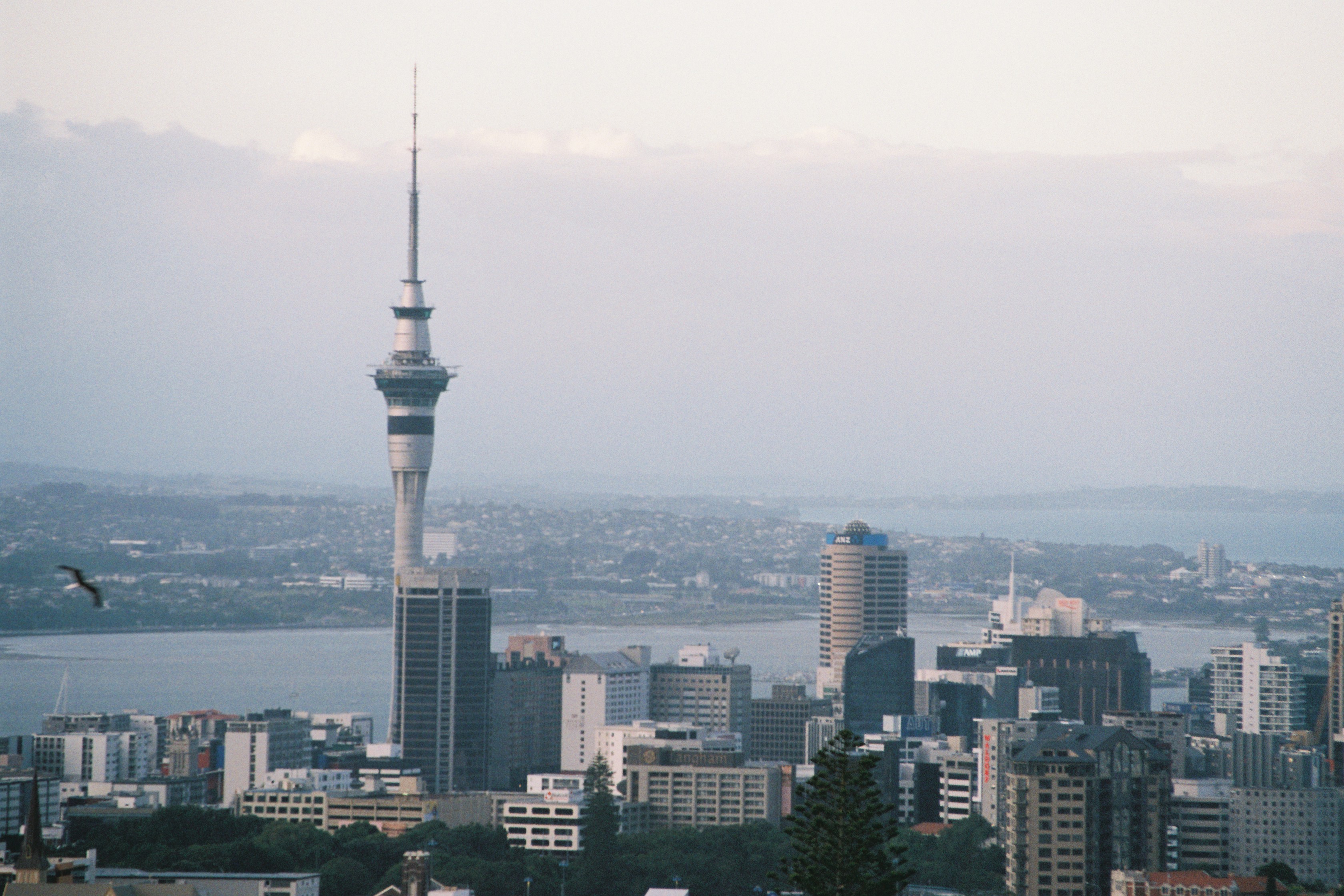
Posted by: newsurfdialogue | February 17, 2010

On to the west coast…

February, 18th 2010

We finally gave in and paid for a nights’ accommodation in Opunake on the southern curve of the Taranaki bulge.  We hadn’t spent any money on a place to stay since Auckland, living out of our van and with the Blakeney’s in Anaura Bay. The van was getting a little funked out, as were Crista and I, not having had a shower for several days while ensconced in the fruitless search for decent New Zealand surf before settling into our next WWOOF stay. We found a hostel appropriating called, the “Surf Lodge”, and the fixing’s for a locally grown organic feast. Two doors down was the fish shop with fresh local Gurnard fillets to cook up for lunch. A few more doors down was the organic butcher shop and we picked up a couple porterhouse cuts for dinner to go along with the veggies we bought from the Te Koha  organic/biodynamic farm outside of Napier yesterday. That place was awesome. Along with the produce they were selling, they were also giving away there less than perfect pears, plums and courgettes (zucchini).

 Leaving Anaura Bay last Friday, we headed for that place on the map which has garnered a reputation for great waves and a history of pilgrimage by some of surf culture’s most iconic figures. In a Surfer’s Journal article published in 2009, New Zealand photo journalist Logan Murray, adding mystique and notoriety to what he describes as, “A remote sliver of rugged farm land surrounded by the southern Pacific Ocean,” and “home to a tribe of hard-core Kiwi surfers,” doesn’t name this well-known destination – to both globe trotting surf denizens, as well every Kiwi in the country –  in his article. However, he talks openly of the icons who have spent time here, along with the dates of their travels here, most notably Miki Dora’s well published stint  in the 1970’s. One of the first conversations I had with Scrubbs and Louia upon arrival was in regards to this very fact. When Dora’s scams and the FBI caught up with him, and he fled the Interpol hands of doom for other foreign shores in his never ending search for perfect empty waves, he left behind all his trinkets and personal effects that were subsequently auctioned off in Gisborne. Scrubbs and Louia’s lawyer friend ended up with piles of his photographs from that auction and suggested that I give him a call, that he’d love to share them with me as well as shoot the shit on surf culture in New Zealand. Unfortunately, we had to move on…

For shit’s and giggles, I’m not going to name this place either (although I think I did in an earlier post). Look at a map.
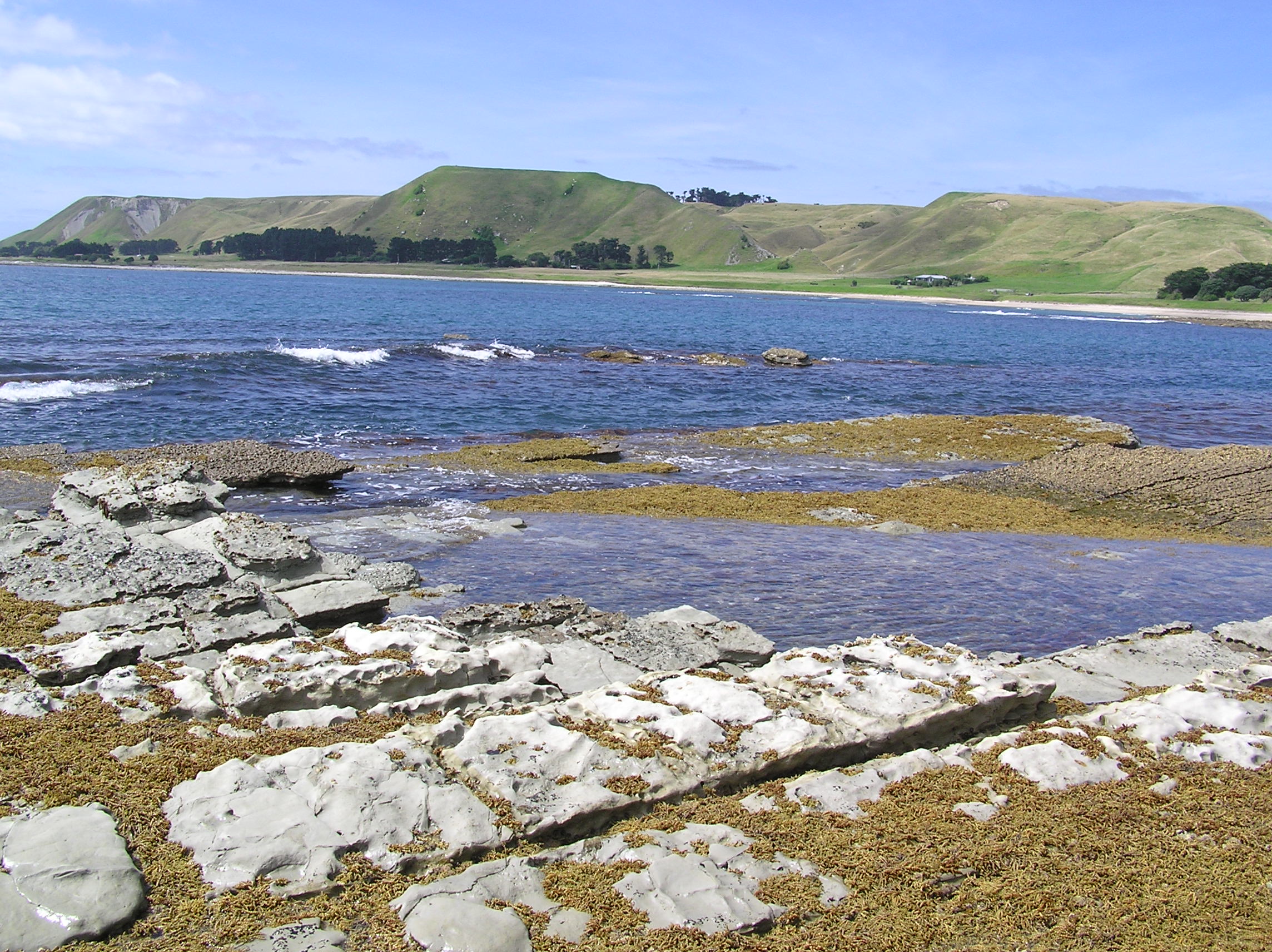
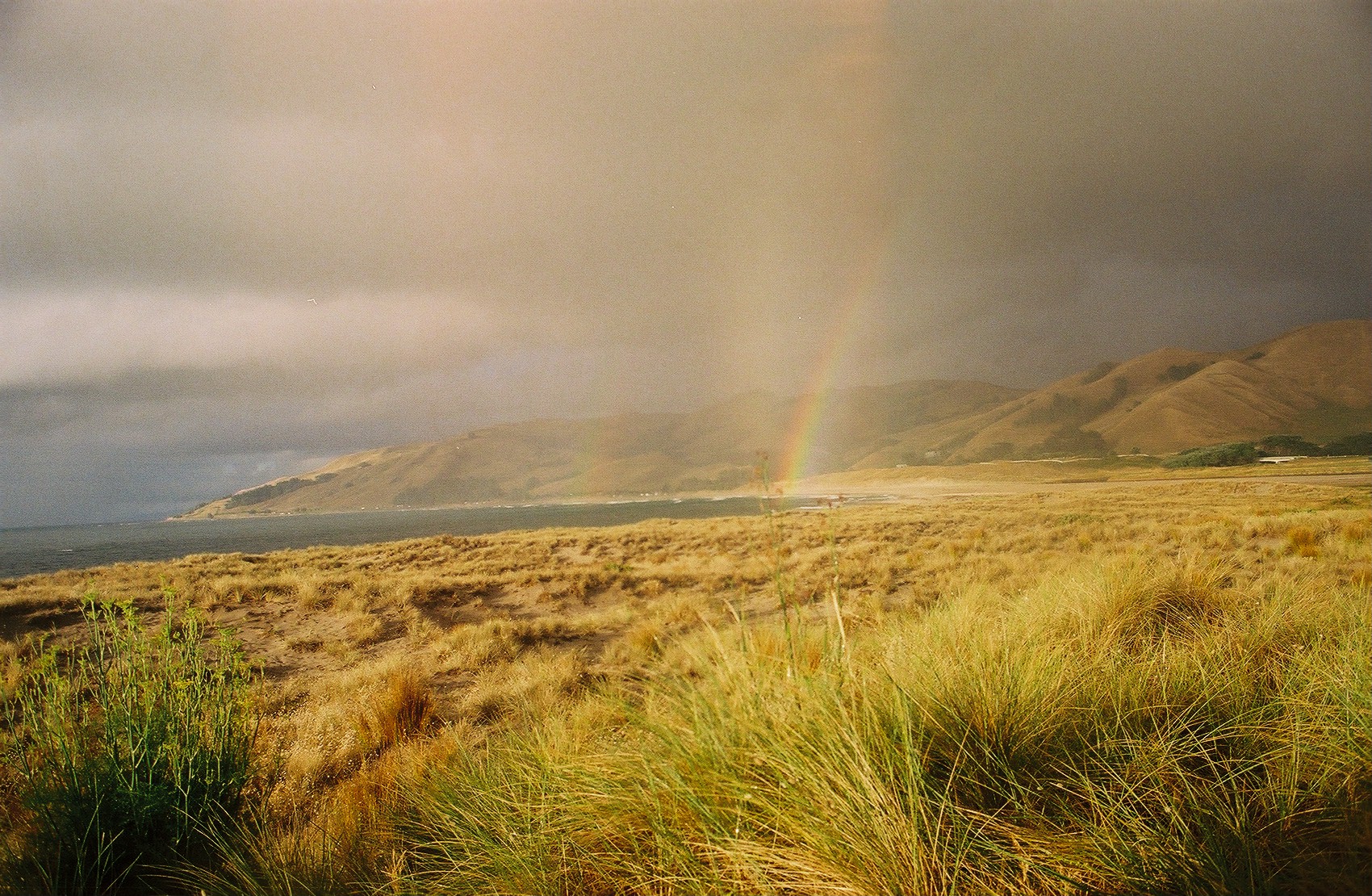
A rugged sliver of tide pools

 Finding a “remote sliver of rugged farm land surrounded by the southern Pacific Ocean,”  and close enough to Gisborne, as Murray notes, to drive there for dinner and  a movie and back to the rural wave rich confines in the dark is not to difficult. We drove there from Gisborne in the late afternoon, after unsuccessfully attempting to have our back door lock on the van fixed, drove around the determined sliver of land, before settling on a sunset roadside pullout with some offshores holding up ridable wave lines breaking off the high tide reefs front and center. A sign of morning wave harvests? No. The winds shifted and shafted the swell, gusting all over the place. We explored the community for the next couple of days, growing increasingly frustrated with the weather and lack of swell. Having been in New Zealand for a month now, and not having found any decent surf was becoming a problem. Patience and outlooks growing dim. Romantic visions disappearing with each cross shore gust of schizo wind blow and undeveloped swell predictions. Throwing a bit of salt into our ant bites and mozzie bumps, the WWOOF hosts we had called were not taking any travelers. Fuck! So we head further south, deep into the Wairoa district, and down beach access roads that lead to waveless coastal landscapes. After waking up in Napier, a seaside resort community/shipping harbor town on the south end of Hawkes Bay, we decide to go cross country and head for the Taranaki region after speaking to a WWOOF host who enthusiastically accepted our offer of hands on dirt digging skills on her property. The van struggled its way over the mountain passes, radiator sucking water fast as the altitude gained on us and the air thinned, but we quickly moved east to west, hoping to scream down the other side of the country and straight into some surf. At Lake Taupo, we were entertained by yet another resort community, and offered me quite a bit of reflection on the reading I’ve been doing on the Tourist Gaze. These communities of Napier and Taupo are progeny of the seaside resorts that sprang up in Great Britian during the Industrial Revolution. For Europeans during the 19th century, the ocean was still a place to fear. There was no romantic idolization of the vast horizon, or joy found in playing in the ocean’s underworld. A growing community from the upper classes were discovering mind and body health benefits from soaking in ocean though, travelling from their inland urban centers to the rural seaside outposts to “take the Cure” that the oceans saltwaters and medical staff provided at exclusive health centers. As new romantic visions of the natural world were published in poetry and prose forms, and combined with increased publishing abilities of the infantile modern era, growing working/middle class mobility and affordable mass transportation through the improved rail road systems, the tourism industry boomed and the ocean became a magnet for fun and sun and escape from the wonderful world of full time employment and the prudish conservatism of the Victorian household moral system. The natural landscape was quickly developed at these resort communities, as entrepreneurs set up industry that would, ironically, provide all the comforts of home and bring drastic change to the rural communities being invaded by the beast of modernity. Where once the Tourist Gaze was set upon the natural landscape, it becomes centered on the developed man over nature attractions – the posh restaurants, bungy jumps, poolside bar service, or nightly entertainment. And that is what we see today in places like Napier and Taupo. Grotesque bodies of development and convenience, that attract international crowds through tourist marketing of pre-packaged vacations that promise to erase the stress and mundaneity of one’s everyday existence. These resort communities make travel easy, but create(d) ever evolving social dynamics between the tourist and the host (people and landscape). The surf world has been developing its own resort community infrastructure for the past several decades now, and that is something that I’m beginning to look into with my thesis research as well. My initial forays into surf culture, while backpacking down the coast of Mexico ten years ago and working at a “surf resort” north of Zihuatanejo without any knowledge of surf history or culture whatsoever has been a fundamental inspiration and experiential research starting point for this project and for my life in general. I’ve seen the positives and the negatives from environmental and social perspectives, and I’m really filling in the gaps with the readings I’ve been doing on this trip. I just read an excellent piece by Steve Barilotti, a long time Surfer magazine photojournalist and editor, published in 2002, about the state of affairs in Bali and other Indonesian surf tourist hotspots that he’s been travelling to for years. Since Europeans began setting up their colonial tourist settlements here in the 1930’s, life for the locals has been a mad capped plunge into the Western vision of civilization and a story of cultural adaptation for better or for worse that has led to a huge sex industry, environmental pollution and increased crime. Long story short- and please understand that these posts are blurbs of idea’s and quickly typed ruminations in the form of a travelogue that will be developed in much greater coherency in my thesis-we all need to be taking a step back and reflecting a bit on the world we are creating and promoting through our travel experiences. Who and how are we affecting our host communities while on our privileged excursions around the world are questions we all need to ask ourselves. Whether on a surf trip, or just a family vacation to Mazatlan over Christmas break, a lot of our collective choices are doing more harm than good unfortunately, but there are alternatives and better ways to interact and support your local hosts.

The wind is again howling. Mt Taranaki is shrouded by a dense cloud blanket. Christine has been packing up the van and making a couple mugs of tea, as I ramble on. We are heading back up the coast to northern Taranaki to WWOOF on another homestead/organic farm in Urenui for at least a few days. There is some swell on the horizon, and this area is, like most areas of New Zealand, known for producing beautiful wave formations off the point breaks and river mouths and reefs that are found around every bend in the road. And this road is named the “Surf Highway”. This time its on. New Zealand, start throwing up some of those gems. Please! Not that this is a trip centered around surfing or anything…

p.s. Got the van stuck again yesterday. Looking for surf in all the wrong places, tried to turn around at another dead end, and backed up into a little grassy ditch just big enough for our vans tires. The wet grass wouldn’t let our tires get a grip and we had to rely on the kindness of a neighbor to help tow us out with his Rav 4. Thanks Rodney! Sorry to wake you from your late night beer fest at 11am, but cheers for jumping at the chance to help us out and for offering us your shower too! No thanks to the man with one leg who didn’t have a phone and only offered us berations for “driving crazy” and other dickish advice. Get bent dude.
Posted by: newsurfdialogue | February 11, 2010

Waipare Homestead

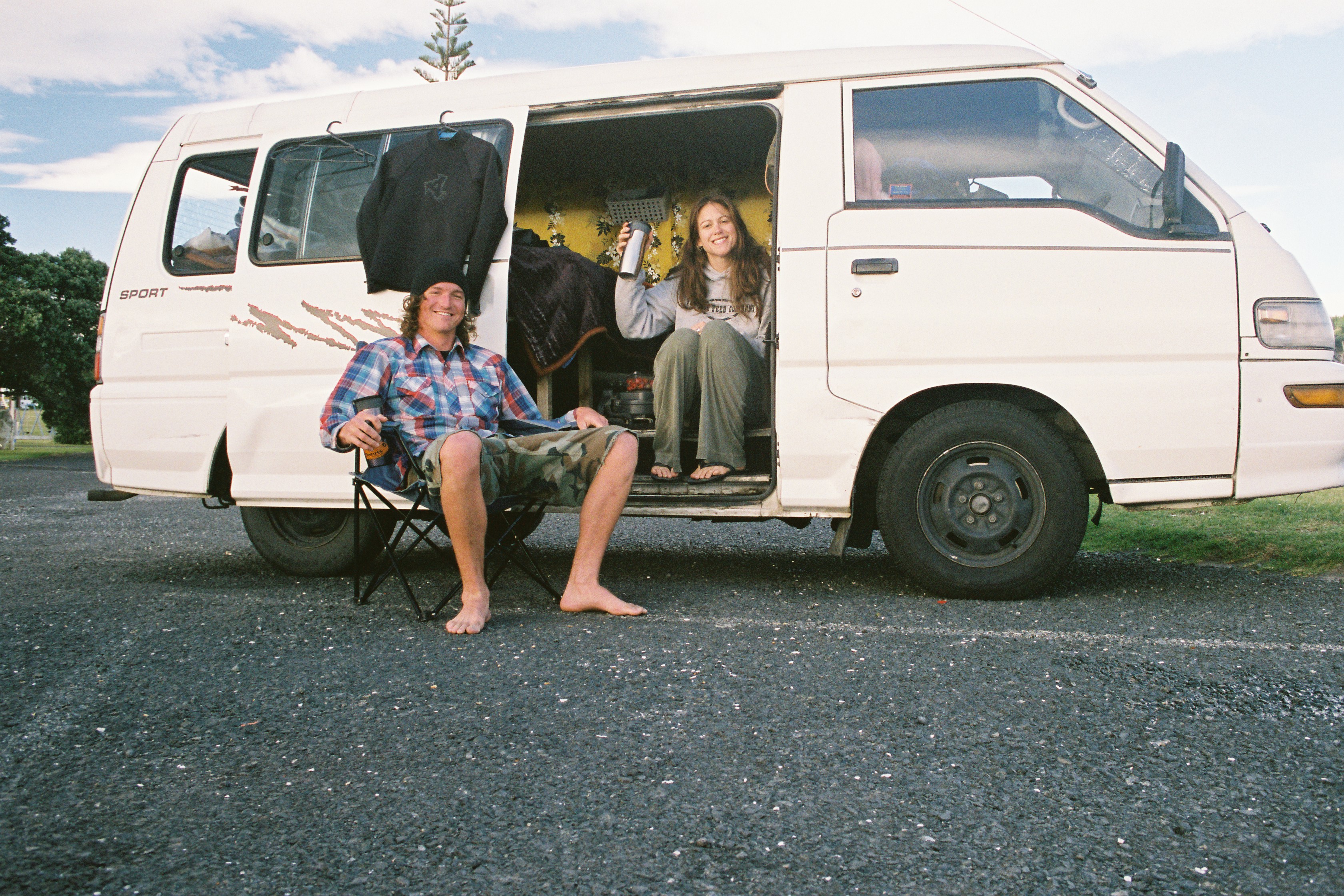
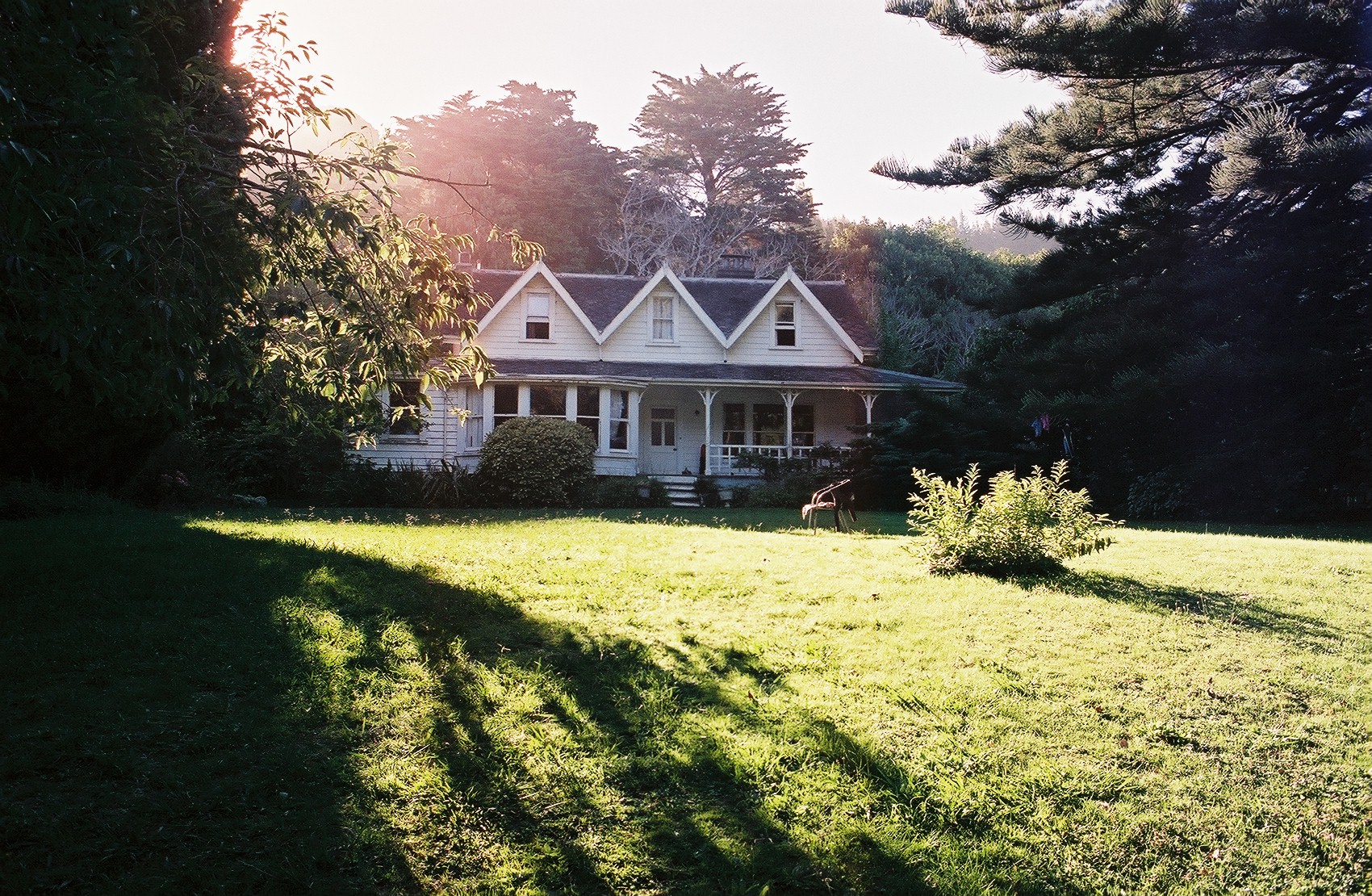
Waipare Homestead. Home sweet as home.

We’ve been staying at the Waipare Homestead for two weeks now. The house, tucked off the beach amongst Norfolk pine, Moreton Figs and copious kawa-kawa was built in the 1880’s out of Kauri wood – almost head to toe. Scrubbs bought this place two decades ago and he and his wife Louia have been hosting WWOOFers for 16 years. Within minutes I was deep into conversations on Miki Dora, Michael Peterson, and my Re-Thinking the Endless Summer theories. Scrubbs has been surfing since the early 1960’s and Louia, having grown up on the Mahia Peninsula – home to well known and well guarded waves, as well as being a Miki Dora hideout during the 1970’s, is a connoisseur of surf culture herself.

“Your doing you thesis on surf culture! Surf culture!” she exclaimed and giggled when I told them the purpose of my side of this New Zealand experience. “So you’re a bum! A good for nothing! Ha Ha! Come and help me dig a trench around Honey Lee’s tent outside. We need to keep her shit high and dry, right bro?”

The rain kept coming too. By morning, the roads where washed out all over the area. Some rising 6 meters or more above their normal flow lines. A giant plum tree went down near the orchard that first night, and by the following afternoon, Christine and I, along with the two other WWOOFers – one from Florida who had been here for two months, and another from Germany who had spent time here four years ago and had just dropped by the previous day to say hello –  were out in the intermittent downpours with chainsaws and branch wompers, hacking away at the felled debris.

The girls – Louia, her two daughters Honey Lee and Juliet, and Cassie, the Floridian WWOOFer all left for the AC/DC concert in Auckland a few days after Christine and I arrived. The two of us, along with Scrubbs, would spend the next several days locked into the dribbling beach break peaks out the back door and into conversations over the incredible history and perceptions that surfing has and has given to us. The mind altering lifestyle that becomes you, submerged in the ocean’s life lessons. Philosophy  and politics and the madness of the human condition and spirit were passed around the dinner table each night. We hooted and hollered at our own surf movie screenings held in the living room. A viewing of The Endless Summer brought many of my idea’s back into perspective, and we cringed and cracked up at Bruce Brown’s horribly off-color imperialist colonial comments about the “primitive” African’s that Mike Hynson and Robert August encountered during their search for the perfect wave. Thomas Campbell’s film ‘Sprout’ blew Scrubbs away with the embracing of boards long and short with abstract concaves, convexes and varied numbers of fins and his generally brilliant artistic representation of surf culture. We also worked around the yard, helping get the grounds ready for the next wedding being help here in a few weeks.

After a fun morning session the night after viewing Sprout, Scrubbs stoke meter about to burst, Christine and I had

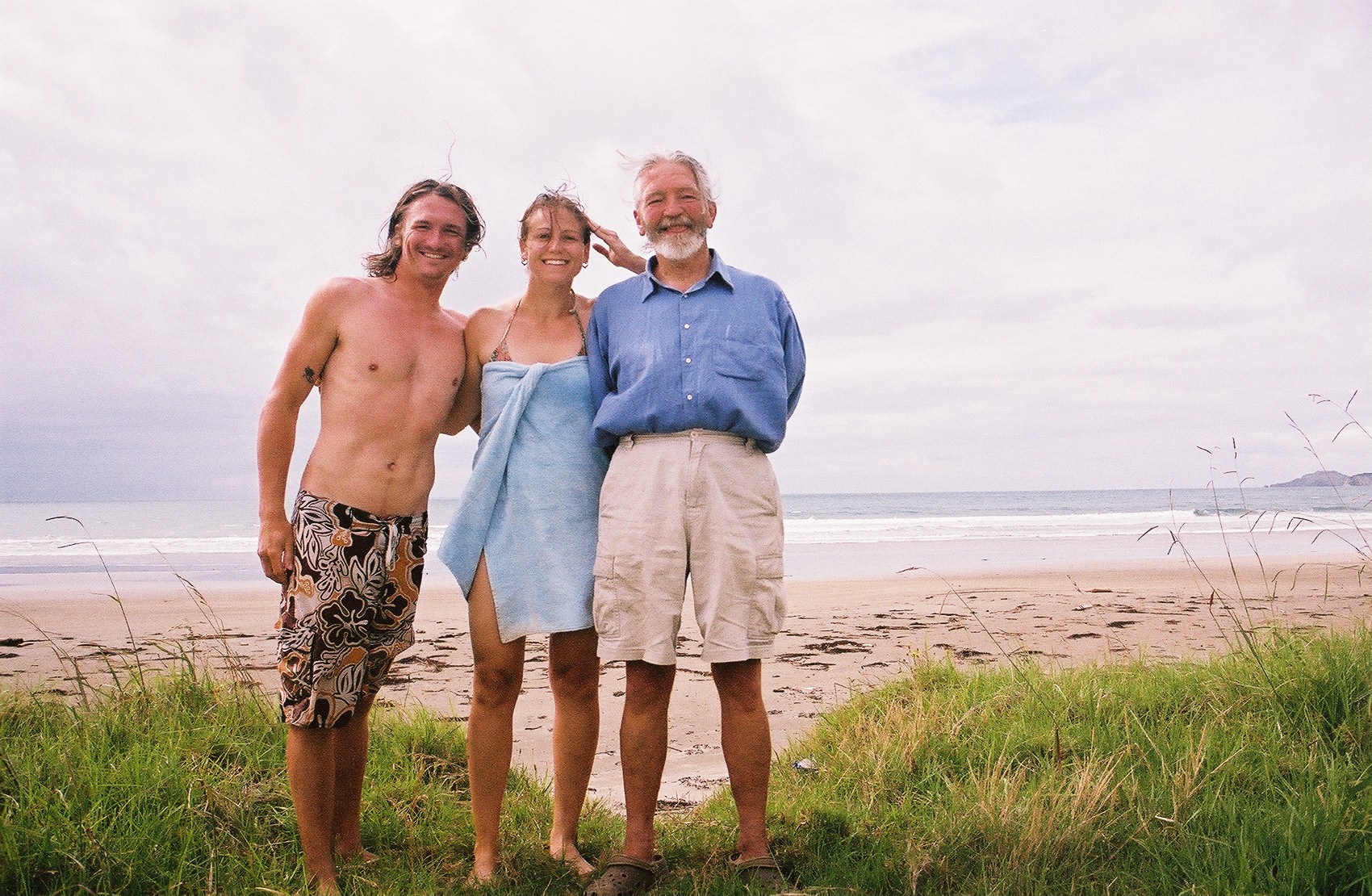
Scrubbs, Crista and me. K. Beach

 laced up our boots and were heading out to attack the Plum tree after the three of us had just finished a potatoe and egg brunch. “I reckon the waves are still looking pretty good; probably time for another session.” He had just been down to the water to survey the scene. I started to say, “oh yeah? Christine and I were about to get on that tree again…” and was quickly cut off by a moment of hysteria from Scrubbs, “Fuck work man, the waves are better than this morning! Lets have another session! That other shit isn’t going anywhere! Priorities man!” So, when in Rome… Scrubbs also stoked us out with all his life long local knowledge of the area’s surf breaks. We took a ride up the hill for a surf check one morning, and based off the visual clues we could acquire from a vista where miles and miles of coast could be observed, he directed us to the right spot at the right time, and I finally scored some decent surf in New Zealand.

A few of our days this past week were also spent on a friend of Scrubbs vineyard, helping them prepare the vines for the nets to keep off the birds. The berries are filling with sugar, and we enjoyed the change of pace and hands on experience with the local wine culture. However, we are really in tune with the fact that New Zealand is in no way the ‘100% Pure’ landscape that the tourism board sells to the world. “That’s a fucking scam isn’t it,” Scrubbs quickly replied when asked about the slogan, and then raising concerns and giving examples of how polluted New Zealand has become. Choppers saturate the local squash and corn fields with chemicals on a regular basis; one of them swooping across the neighbor’s fields while we plucked new growth off the vines, causing both Christine and I to worry and wonder. “We were rained on with those little white pellets just the other day from a copter,” Louia mentioned during one of our conversations, “Fucking bastards.” One afternoon in Gisborne, we caught part of a documentary on the chemical 1080, which was playing on a sidewalked television outside a hippy store, which is used locally and a scary topic for biologists and environmentalists from around the world. The forestry practices have long been destroying the landscape too, and the cattle and sheep industry polluting the ground water supplies, with signs up in all the campgrounds and holiday parks warning people to boil their water before drinking.

Yesterday, we continued to plug away at the Plum tree, Christine going for an afternoon swim with Honey Lee and Juliet, me reading the through the stack of books on surf history and local folklore that Scrubbs had dug up for us. The sun has dried up the downpours and the road is waiting. Scrubbs and I hongi’ed and contact info was passed along to us. Surf bro’s done south that would love to show us around. Off toward the South Island. Off to track down Miki’s ghost.

P.S.

Consequently, I have a theory on Miki Dora’s reincarnation. Being the consummate recluse, staunch deplorer of crowds, surf mainstream-dom, and lover of this particular region of New Zealands North Island; I just might be on to something in believing that he has come back to us in the form of Moko – the people famed people friendly dolphin that has been cruising the Gisborne coastline for several years now. Possible retribution for the scams he pulled to live the search of finding those perfect empty waves. Could be worse…  Just a thought…

Posted by: newsurfdialogue | February 11, 2010

Washed out of Wapiro

January 30, 2010:

A north east swell was suppose to come in today. I woke up a few times throughout the night to the sound of waves crumbling along the bouldered point and manic moments of rain and wind. My dreams were deep animated wave songs that curved and melted off the backs of my eyelids in deep reds and blues; no doubt feeding off of the aural songscape drifting in through the windows of our van.

 A cup of green tea and walk around the bend with the sunrise reveals no wave party. Swell lines rise and fall as the ocean tidal surges ebb and flow over shallow and deep contours near the shore. This swell just isn’t quite big enough, not at the right angle or just not in the mood to curl her turquoise top into a walled up face capable of inviting a wave rider onto the undulations of her cheeks and chin. The rain takes a break, but only for a moment, and Christine and I have a cup together and I move the van under the cover of a open aired – but roofed – dirt floored parking area attached to the vacated fishing club house. With camping chairs and books in hand, we read and wait out the rain, hoping that the rising tide will us bring us a gift.

In Leonard Lueras’s, Surfing: The Ultimate Pleasure, he points out that flat spells have long driven surfriders to frustrated lengths. He references a 19th century Maui circuit court judge, Abraham Fornander, who authored, An Account of the Polynesian Race: Its Origins and Migrations, which details a specific ancient Polynesian “surf coaxing ritual,” where distraught surfers with the help and guidance of a kahuna would whip the waters surface with strands of pōhuehue, or beach morning glory, until the waves returned. A chant would accompany this action. Translated, the pōhuehue chant reads:

Arise, arise you great surfs from Kahiki,

The powerful curling waves. Arise with the pōhuehue.

Well up, long raging surf.

Fornander, as Lueras describes, also documented chants of demigods intervening with oceanic quietude for the sake of discontented surfers.  Lueras writes,

A chant about Laenihi, a Hawaiian woman with celebrated mystical powers,

recalls how she forced winds to blow and caused “the sea to be aroused from

its calm repose.” This wave generating wind, called the Unulau (or trade wind),

did its mystical thing, and as the chant notes: “Early that morning the surf

began to roll in. When  the people rose from their sleep and saw the surf, they

all began to shout and yell.”

And with the stoke flowing through their bodies, they no doubt paddled out and had an epic session. Unfortunately, I know of no kahuna, and have no demigoddess to plead to. I have the stories though, and the meditations that they invoke, to help ease the ever so slight growth of anxiety over our inability to find a pocket of perfect, empty waves. So we sit and read, eat apples with peanut butter, drink tea and grow a bit nervous with the rain squalls. Eventually, we decide to drive out of Waipiro Bay, before the road washes out.

We know of a visitor’s center in Ruatoria, a one horse town off the main highway, a handful of kilometers north of Wapiro. There is internet access there and telephone, so we hope to make use of it to check the weather and make contact with WWOOF hosts. This is a good opportunity to initiate ourselves into the world of WorldWide Opportunities on Organic Farms. A perfect segue to introduce my core idea behind my “Rethinking the Endless Summer” thesis. With so many surfers travelling the globe, no doubt influenced by the photo’s and films that we all absorb from the multitude of resources available, I think that an unsustainable and irresponsible dominant travel paradigm has developed over the past 50 years.  Internet swell forecast tools, ever growing ‘surf camps’ developments in once pristine environments and wave-centric travel mentalities are strangling the soul of surf culture in my opinion, giving all of us a bad wrap in the wake of others laziness. So when Christine and I found out about the WWOOF program, which is a global network of farm hosts who allow travelers to volunteer their time in exchange for room and board, I thought it could be an interesting way to promote an alternative notion of surf travel. A way to spend the flat spells, to get local, to engage in cultural reciprocity and promote health, sustainability and to learn. In New Zealand, there are over 1000 hosts all over the country, many of which are spittin’ distance to a surf break.

The visitor’s center was all closed up though. We go across the street to Mijo’s Dairy to ask around about it opening today, and the woman behind the counter thinks for a moment and says a bit apologetically, “nah, probably go home for the weekend. What were you needing, the internet?” We told her we did, wanting to check the weather, see if this rain was coming to an end, to check the swell, get in touch with some people.

“Well, I guess if you just need it for a few minutes you can use our computer. Don’t think it would hurt anyone,” says the man now standing next to her.

Twenty minutes later Christine and I in the back room of John and Mihi’s dairy, eating fresh smoked kahawai with hot chocolate and talking about the world, the Pacific Northwest, Maori-dom, shearing sheep, the university and the love of not having to travel. John used to surf, has an old 9’3’’ back at the house, but his knees have given up on him. The rain continued to rain. Wasn’t suppose to stop for days. Mihi gifted Christine one of her hand knitted unspun wool sweaters. John told us to come back to carve some whale bone. They insisted that we call up their friends, Louia and Scrubbs in Anaura Bay, about an hour south of Ruatoria. They are long time WWOOF hosts, and real good people they told us. John said that Scrubbs was an old kiwi surfer with a cache boards and of knowledge and stories about this place, and Louia a Maori woman who organized fashion shows with the local kids, amongst other artsy endeavors.

John needed to get on with washing the outside walls – best done when the rains came because it saves water – so we leave for Anaura, cruise along Hwy 35, where the rivers and streams swell up and wash out the tar sealed road around this bend and below that dip. Our windshield wipers squeak across the glass in mad dashes, and the defrost struggles to keep our line of sight clear with all the humidity surrounding and emanating from us. Here we go…

Posted by: newsurfdialogue | February 9, 2010

Tales from the van #2…

January 30th, 2010:

Spent the day in Gisborne City.

Making contact with potential farm hosts to show us around their fruit tree, shorn sheep and bee hive lifestyles.

The library is a noisy adventure with no restroom. Have to head next store to the police station. Put 20 cents on the counter and pee away.

At Woolworths we buy real, authentic New Zealand minced lamb for pan fried burgers. Silver beets for vitamins and ruffage. Mineral waters for drink. Cheese is already in the chilly bin.. Whittakers chocolate for pre-dreamstate indulgence.

Head down a dirt road, north of town and on the beach. There is a nice grassy knoll off to the right, just need to scoot our house across a patch of sand. Steady. Steady. Tires begin to bury themselves. Chassis sits up real nice and comfortable on a patch of grassy hard pack. We are fuckin’ super stuck.

Dig and dig and dig. Shove timber under the tires. Punch the van and scream obscenities. Repeat. Back door lock seems to break. Continue the madness for one hour. Bloody knuckles and hungry bodies.

The sun begins a final descent beyond the hills. We are debating a hitchhike into town or a night buried in the sand.

“Someones coming…,” Christine says, “…pickup truck…yep, GDC on the side.” Gisborne Dept. of Conservation. Paid land stewards and enforcers of law and order amongst the sand dunes and tide pools.

Curly haired beer belly man gets out of his government vehicle. Che Guevara’s face printed on his red t-shirt, ‘Cycling Revolution’ printed below.

“Looks like you could use a hand. Thought I’d come down, take the dog for a walk  and pull you out. Been watching you from town for awhile; from the camera up there,” he mentions as he points out the survelliance machine up on the hill, pointed right at us. Big Brother here to save the day. “You got a tow hook under there?”

Christine blushes, thinking to herself of how she had changed her top awhile ago, hoping he hadn’t been zooming in for a closer look. “You guys ever see the movie Whale Rider,” he asks, while reading my anti-capitalist punk rock t-shirt, “filmed right around the corner here. Pretty good film I reckon.”

We kept busting knots and rope braids, the bastard van acting like a rock wedged between two boulders. Our angel drives off to get reinforcements, as darkness blankets the day. The stars come out and unseen waves break gently on the offshore reef. Somewhere near here Moko the dolphin patrols the Gisborne coast line.

With crayfish rope procured from a buddy’s house, the van is ripped from the granulated stone, one pedal to the metal surge that sends the van in a mad fishtail. Up and over the ditch, wanting to tip over as I struggle to control the unexpected herky jerky climax from the drivers seat.

“Yeah! Just a little bit of fun for the night in Gizzie for ya.”

“Yeah, piece of cake man. Nice and smooth. What was your name by the way?” I’m a bit stunned really, so is Christine.

“Jamie.”

“Cheers Jamie. Thank you so much dude.”

“Ah, no worries mates. I had a good buddy driving round the states once. He broke down and some good folks took him in, fixed his car for free and gave him the keys to their cabin. I reckon that’s what people should do for each other.”

Off he drove, leaving us to calm down and figure out the rest of our evening.

“Holy shit. I can’t believe you didn’t tip over. The van was like a feather in the wind. Jesus Christ.”

“I wasn’t expecting that. At all.”

We pulled around the gravel cul-de-sac, a few meters from where we were. Cheese, bread tomato and mustard. Lamb burgers will have to wait. The chocolate doesn’t. Swatting at a handful of mozzies diving for our earlobes, we pass out in exhaustion.

Daniel Duane was right, the surf trip story lies not within the details of ridden waves, but of the rides to those waves. He says, in his novel Caught Inside, “The broken truck axle and the six hour hike through the Baja desert for help are far more likely to be repeated years later than how “I made this superlate drop, and then the wave hit that inside bowl and just throated me.” The story is imbedded in the people, places, and things one encounters while on the search. I’m getting a bit frothy though, as we continue to search for those superlate drops and inside bowl sections.

morning after getting stuck...view from the van

Posted by: newsurfdialogue | February 9, 2010

Tales from the van…

January 29th, 2010:

The van keeps giving us headaches and minor freakouts. The radiator is sucking down the water. Real thirsty bugger. Stopped off at Te Araroa to check the surf. Hike through horse pastures to onshores and mushed out beachies. Not worrying about it. Tomorrow looks good for surf, at least on paper.

Started back on SH 35 and the temp gauge shoots off for the red line. Brought the steel horse back to the holiday camp. Engine hot as hell, fuming underneath the co-pilots chair. The mechanics back in Auckland smothered engine oil all over the place. Like a big heavy metal Japanese salad. Steaming. Aromatic. So exotic.

Called some people on a borrowed phone. Christine and I ate avocado, tomato and cheese sandwiches with ginger brew at the picnic table under a tree. Some people came from Tikitiki to have a look, and made life better. Water goes in this hole and that hole Pakeha, says the Maori mechanic. On the road again in no time. Sweet as. Keepin’ on truckin’…

Posted by: newsurfdialogue | February 6, 2010

notes from the road update

January 28th, 2010:

Past two days have been exploring the nooks and crannies of the coast. We left the Maketu/Te Puke area this afternoon after spending one night on some Maori land at a blown out rivermouth that is known to get good. A local guy back at Waihi Beach had told us about the area. The lowtide estuary that surrounds the grassy camp area is full of mussels and clams, but posted signs warn of paralytic shellfish poisoning.

The coast road winds its way around the bays and up over the hills and down the valleys in full technicolor display as we continued south toward the remote and unpopulated East Cape. Really beautiful sights and smells and friendly people. Christine and I are taking our time and not letting the lack of swell bum us out to much. We are in Waipiro Bay right now, having parked our home under a N.Z. evergreen across the quiet dirt track that outlines the cobblestoned south side of the bay. I think this place needs a good extra foot or two of swell to really start to take off and show some form and function for a solid dance routine between the surf starved and the lonely long legged wavestress that I observe rolling along the point, but not breaking, in a tortuous mother natured strip tease. “Wow, this place has so serious…,” and Christine chimes in and finishes my thought, having heard a few days of the same comment, “potential, right?”

 I took the fish out last night after the tide had dropped and caught a few knee high dribblers breaking just inches above the boulders. Another couple joined us here at the bay, an English couple from Cornwall, Hugo and Rose. We had seen them the day before, as both of us were driving the same southerly path, pulling over at a couple of the same bends and viewpoints on the East Cape to look for swell. This spot was too much of a coincidence, as we are well off the main highway, and toward the end of a narrow, bumpy and secluded empty road well north of the Gisborne area. We all communed our food and cooked up a nice big pot of mae ployed pasta and silver beets – extra butter and sardines out of the tin. We passed the peace pipe and talked about our journeys so far, with Hugo and Rose having spent a month here already.

Before eating Hugo and I were standing along the heaps of driftwood and cobblestones, overlooking Wapiro. The rugged hillside is awash with evergreens, rough lipped shrubs, seaside grasses and rocky faced cliff drops facing the sea and wrapping this entire natural splendor around the bay, coming straight from the depths of the western Pacific and rising several hundred metres or more.  North island kaka’s drift up and down with the shifting pockets of wind kissed air. Mozzies buzz and dive for any of our flesh they can find. The sun had set behind the hills, and small, too small to ride, sets of waves were breaking in uniformed regularity along the sweeping point. So much potential…

“Sometimes I feel so lucky to have this as the thing that I do…surfing…surf travel…having this as such an intrinsic part of my life,” Hugo mentioned as our bodies and eyes faced the northern landscape. The dusk was turning our view into a Wolfgang Bloch painting. The bay and landmass turning  multiple shades of dark grey, with small brush strokes and scratches of brown and red visible amongst the darkening hillsides streaking across the most natural canvass, adding dramatic nuance, depth and complexity.

“Yeah man, to have this as what you do, surfing, travelling off to places like N.Z. in search of waves and all that is attached to that search; like this,” as I motion with my hands from right to left, to drive home the overwhelming grandeur of our immediate environment. “We are pretty fuckin’ lucky. And sometimes I think about other peoples passions; the things in their lives that keep them going, give them that fired up excitement, like NASCAR or college football, and I just don’t get it. I think they are fucked up and crazy. But I know that is a closed minded thought to have…self-righteous…judgemental…There are other ways to feel what we feel.”

That makes me think of travelling, and why we surf stoked do it. Where we come from, what inspirations have trickled down the generations; the articles, books, photos and stories – oral traditions. So many ways that the histories of surf culture have been passed down and inspired, of the thrill of the hunt, the adventure of search, the nucleus of contemporary surf travel inspiration, where the Endless Summer came from; I am drawn to finding the beginnings; the idea of the perfect empty wave. Campfires, surfshop sewing circles, surf spot parking lots and now the world wide surfnet are great places to find the stoke, but I look even deeper.

Those stoke stories really started coming around for a greater audience, a worldly audience during the 19th century, and really took off at the turn of the 20th. Mark Twain, Herman Melville, London and countless others all travelled to the Hawaiian islands and chronicled their observations of men and women on planks of wood, and witnessed the exuberance of the Native Hawaiians in full trim around the breaks of the South Pacific. These literary kingpins, especially London, really got the ball rolling,  those toes curled up and over the nose as a new chapter of surfing came out of the Islands and into the lives of the many. Jack London flipped the paradigm that no one, as Twain put it, “but the natives ever master the art of surf-bathing thoroughly.” Europeans, along with all their other baggage, had brought with them a horrendous fear of the ocean. The literatures and captain’s logs are ripe with tales of death and destruction for any who drifted out past the shoreline. But London brought to Hawaii a different attitude. A young American attitude that asserted and urged, “what that Kanaka can do you can do yourself… Get in and wrestle with the sea; wing your heels with the skill and power that reside in you; bit the sea’s breakers, master them, and ride upon their backs as a king should,” after paddling out at Waikiki in 1907. The Woman’s Home Companion magazine that his documented first surf attempts appeared in would reach such a great audience, and as more and more people began flocking to the Islands for their piece of the tropical paradise experience, the modern day surfriding revival and the idea of the Endless Summer would begin fruition.  Now most estimates are around the four million mark, so as high as 20 million. Four million surfers, nearly as many as there are people in this country of New Zealand.

Even though their accounts were full of white superiority mind frames, their literatures speak volumes to the resiliency of these peoples they encountered. Having survived wave after wave of disease and vicious attempts by missionaries to vanquish their non-western cultural customs, toward the end of the 19th century, a return of surfing to more public venues began to grow away from the hidden coves and remote areas that the Hawaiians had needed to use for several decades. With Hawaii on the map as a tropical paradise fit for colonization and Western tourism, white people began to paddle out themselves.

And now there are millions and millions. Now, people from the Great Northwest and England, end up at the end of remote, deserted fishing village road sides together, parked under Norfolk pines, on the east coast of New Zealand, waiting for swell and sharing expressions of disbelief for the power and importance of our chosen paths. Pretty cool.

Posted by: newsurfdialogue | January 29, 2010

On the road, out of Auckland

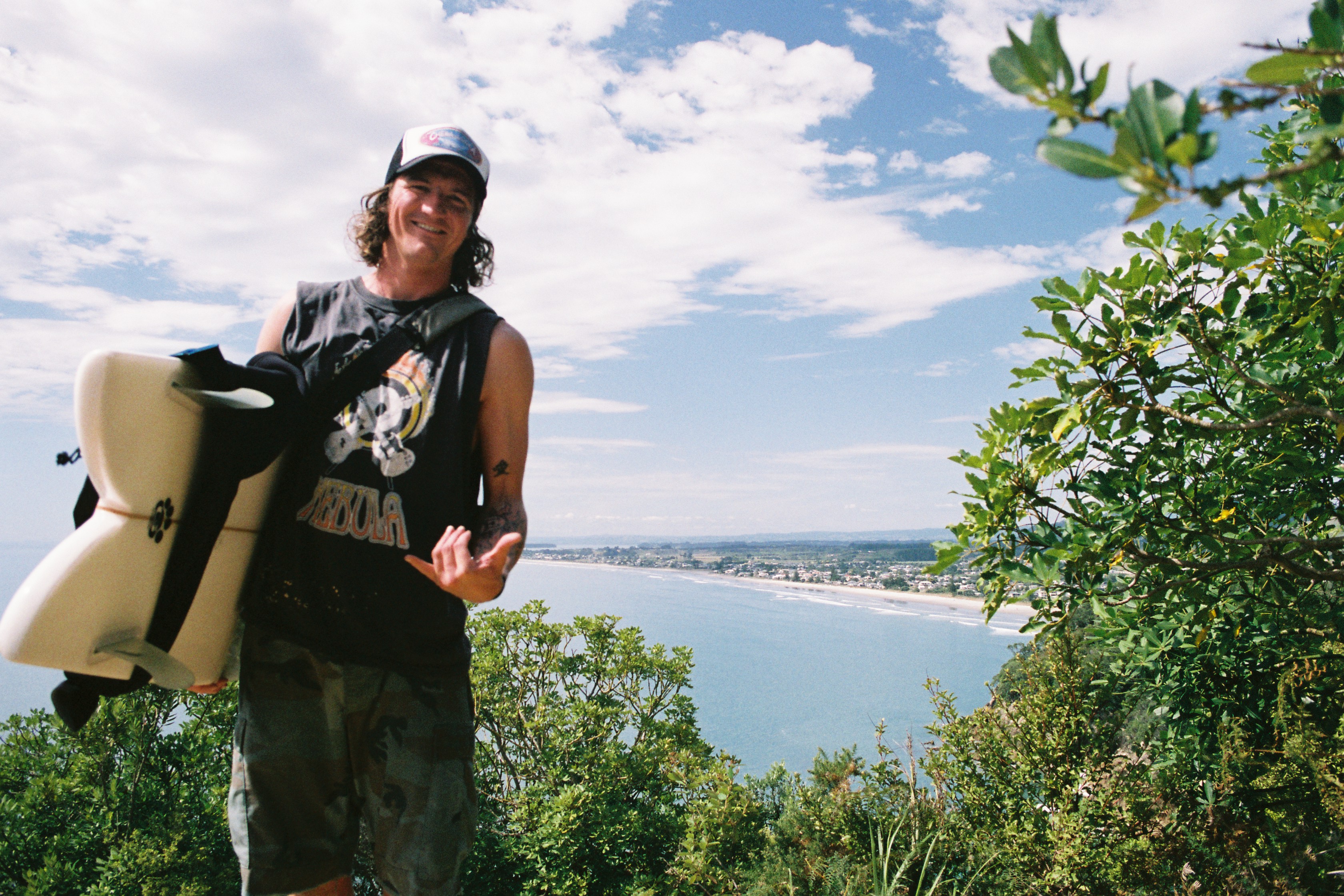
On the search, shaka fresh

camped out at the Waihi Beach car park

Full speed ahead as we pull out of Auckland with the sunrise and patchy rain clouds. The city quickly turns to farm land, the Southern Highway a blur buzz of cows and sheep, maize and turned up top soil. Up and around the hills and curves and rivers of the south Coromandel peninsula to Whangamata on the east coast, I figure out the gearing of our Mitsubishi camper, and hope the black smoke doesn’t pour out of the exhaust anymore than while we trudge up the inclines that stress out the old diesel engine sitting under the co-pilots chair. At Whangamata, the famed harbor bar isn’t producing any peaks, but Crista and I stroll the beach, stretch our legs and poke at the jellies washed up along the white sand sea line. We continue to cruise, on the left hand side of the road, and trade big ohhs and ahhhs and toothy grins as we round the corners and feast on another eyeful of New Zealand landscape. Only hours into our four month road trip and we are impressed with the sights and smells and the people who aren’t afraid to smile and wave as we pass them by.

Further south, we park it at Waihi Beach. We camp out at the beach car park for free for two nights. The surf is small, but fun, and the locals friendly and helpful. The ocean is full of jellyfish, both big meaty ones that drift into shore with the tidal ebbs and flows, and millions of little jelly tubes and spirals that make the water a soupy concoction that I stir up with every paddle.

The roadside fruit stands are keeping our vitamin C intake up at peak levels. Although finding fresh fish to cook up on the beach is nearly impossible. When we asked at the bakery where a fresh fillet (pronounced ‘fill it’) could be found, the guy behind the counter answered, “I reckon down on the beach with a fishing pole.” So we had pasta for dinner, and dreamt of the squid tubes and kumara root we had the night before.

We took a hike toward Homunga Bay in search of better waves and new horizon view points. The trail stomp vistas were awesome, but the surf was hiding. We hiked back out, packed up and put the Zorro Blanco back into gear.

Posted by: newsurfdialogue | January 26, 2010

Go to Auckland, have a picnic

Nice view, especially since we had just paid a pockets worth to get our van outta the tow yard.

what happens when smurfs and trees get it on

Here are three spots worth checking out in Auckland, especially to take a break and enjoy the outside environment, and they are all free ya cheap bastard.
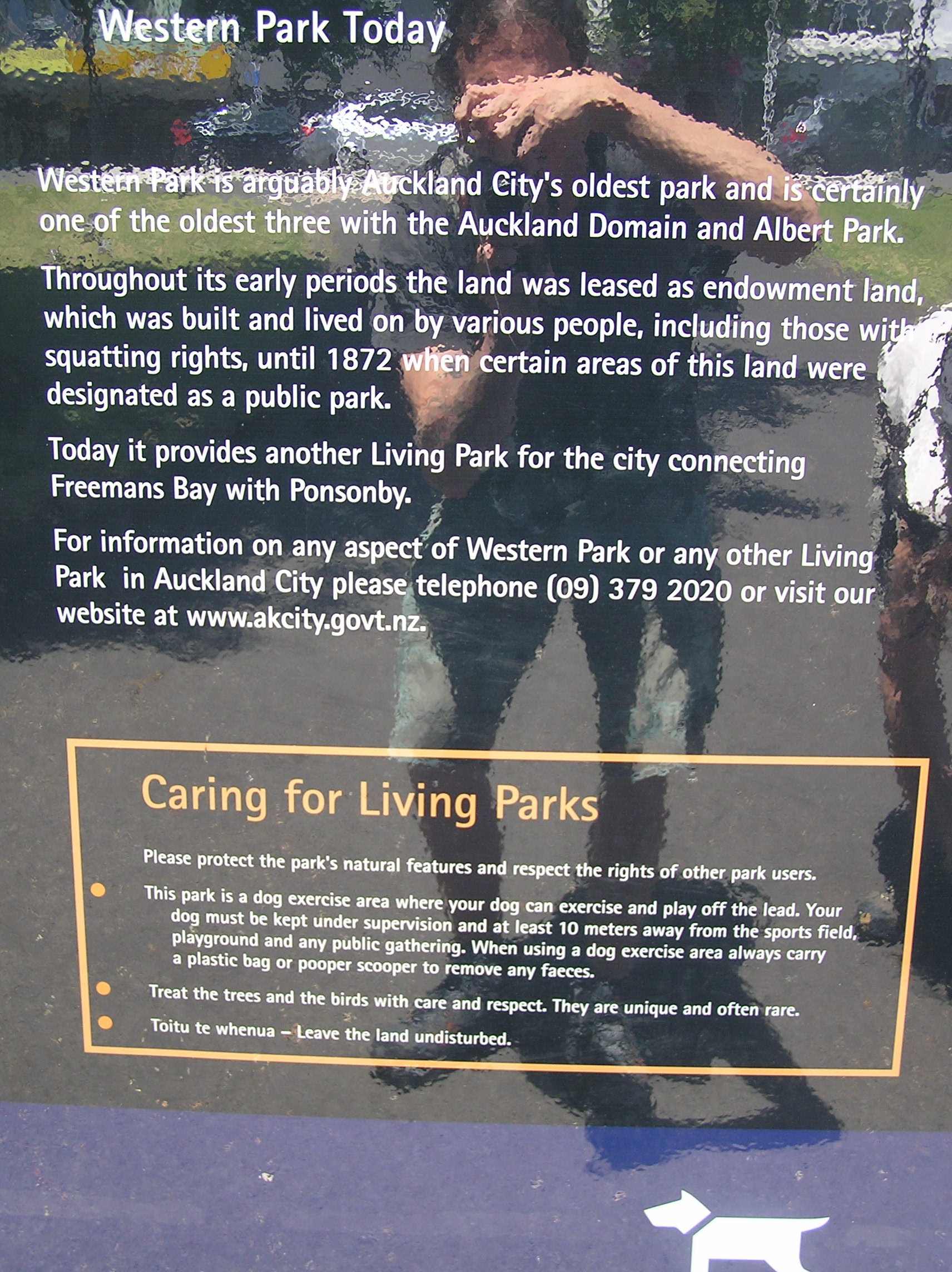
1. Western Park: We found the park entrance near the corner of Ponsonby and Karangahape Roads in the Newton/Ponsonby domain neighborhoods. Big sprawling and heavily wooded park with plenty of benches and grassy sit spots to enjoy your take-away fish and chips or maybe just a quiet moment with the birds.
2. Mt. Eden: An extinct volcano in the Mt. Eden neighborhood. Walk up to the top and enjoy the same 360 views of the entire Auckland area that one pays $12 for by going up to the viewing area of the Sky tower. It is also a historical and sacred Maori site, and you can see right down into the volcano. Beautiful sunset views. Down in the Mt. Eden centre are several shops for food of all kinds, as well as book shops and a real slice of Auckland neighborhood life.
3. Kelly Park: This looks to be a vacant city lot that has been taken over by the neighborhood artists off Mt Eden road in the Mt Eden neigborhood. We found it while wandering around the area near our hostel. Trash becomes art. Food grows out of ground. Bring your chess or checker pieces and play on table with a chess board painted on, or just use some rocks. Make your own city tree art piece. Someone spray painted “check out Kelly Park on Facebook,” so if you are on Facebook, check it out.

Posted by: newsurfdialogue | January 26, 2010

short and sweet Auckland post

January 18, 2010. Two hundred and eighty two years ago today, Captain James Cook and his crew aboard the H.M.S. Resolution sailed up to the Hawaiian islands and the great observations of surf culture in all of its early magnificence would take off. Two hundred and eighty two years later, Christine and I are landing in Auckland, New Zealand to surf, work on organic farms, get to know the landscapes of these two islands and finish our undergraduate degrees at the University of Washington.
Off the airplane and through customs without a hitch, claiming anything we thought necessary. A New Zealand woman warned us that the customs agents were a surly lot, real tough bastards and out to get you. That wasn’t our experience. Helps to be good and honest I suppose, suspicions probably arise if you have nothing on their lists to claim.
Through the arrivals gate were great big banners announcing and welcoming the Junior World Surfing contest competitors. The contest was starting just two days after our arrival, west of Auckland in the surf town of Piha. Good to know, as I’m not any sort of fan of the competitive surf scene, nor the crowds they draw and the access they deny. We had plenty to do in Auckland anyway, and wouldn’t be heading to any coast until the contest had ended.
Auckland is a city like any city with all the conveniences of home (except internet service is a costly cross to bear. Wi-fi is not readily available, be prepared to get disconnected and appreciate it!) but a very beautiful, green and floral rich city that gets quiet early. There are hardly any sirens to be heard, or cars incessantly honking nor alarms blasting off on every other block. Our mornings in Auckland were early rising tea cup yoga stretch outs either on the deck outside with the morning bird songs or inside the common area of our Mt. Eden neighborhood hostel when the rain drizzled down from the “long white cloud” reminding us of the Seattle rainscapes that we came from.
We purchased a campervan from an English couple, got it serviced and headed for the east coast, with only the destination of Whangamata on the southern outskirts of the Coromandel peninsula . The only hangup was the night before we left Auckland. We pulled into the “Fresh World” vegetable shop parking lot as it was closing to buy some provisions for the road, and were directed across the way to “Food Town” because of the hour. After loading up on the essentials and a handful of fresh New Zealand squid tubes and Kumara root for dinner, we came back out to the parking lot and found our camper gone. We assumed leaving our van in the “Fresh World” parking lot after they closed would be allright since the owner directed us herself to the other grocery mart. A couple heard us making our phone calls and public frustrations at the customer service desk inside the grocery and offered us a ride to the tow yard, which was greatly appreciated given our lack of bearings in a city with a very European roundabout, cockeyed street layout. He is a surfer from up North and she a British Columbian nanny. $220 bucks out of pocket later, we were back at the hostel and loading up to hit the road in the morning.

Posted by: newsurfdialogue | January 25, 2010

30,000 foot reflection

We are several hours into our flight out of Los Angeles to Fiji, en route to New Zealand. Bad weather was heading for southern California where we had been visiting Christine’s family, a convenient high time to seek out fresh rays of sunshine and culture. Thoughts come to me as we cruise thousands and thousands of feet above the Pacific Ocean. Across from me, a short haired pudge of an American woman loudly reads bible stories to her son, whilst everyone else tries to sleep their way across the international date line aboard a cramped coach class Air Pacific airliner . I had been sleeping myself, and began to drift into a dream state of Revelations and images of el Diablo in abstract 666 configurations. I slowly came out of my 747 slumber, the airplane dark and calm, except for the ray of light illuminating the biblical horror stories to my left. The thoughts come from the readings I’ve been submerged in for the past year. Surf history readings by the men and women who have paved the way for the curious and stoked surfers looking for the origins and paths surf culture has been spawned from.
Right now, the thoughts that come to me are inspired by the woman and young boy across the way from me. A couple hundred years ago, Christian missionaries made long and arduous pilgrimages across this sea to the many land masses of Polynesia. Many of these islands were ones that Polynesian explorers had themselves colonized several hundred years before Europeans had “discovered” these areas and began their tumultuous relationships with the many different cultures that were thriving in places now known as Hawaii, Samoa, Fiji and into the far southern reaches of New Zealand; among many, many others. After the explorers and tradesmen established ports of call, Christians boarded the wooden vessels and set out to enlighten and transform the uncivilized dark skinned savages to properly clothed, god fearing purveyors of righteousness and morality. In places such as Hawaii, the art of surf riding, which was a central component to the spiritual and social structures of the Hawaiian culture, would be strongly discouraged by the missionary groups for its heathen and immoral influence on the native population, going as far as promising eternal damnation in the pits of hell for surfing on the Sabbath1. Surf journalist and historian Drew Kampion, in his book Stoked: A History of Surf Culture explains, “Not only did these missionaries impose a strict Protestant paradigm on an exuberant people while diseases destroyed their bodies, but they confined them to modest attire, forced them to speak in a new tongue, and discouraged them from casual sex, gambling, and playing in the ocean.” He goes on to explain that, “Surfing’s association with nakedness, sexuality, wagering, shameless exuberance, informality, ignorant joy, and freedom were counterproductive to the designs of the church fathers, who, curiously, wound up owning most of the land in the Islands.” The many diseases that accompanied the Europeans had intensely weakened the societies they came in contact with as the populations were decimated, making the demands of the new colonizers the seemingly solitary handle to grasp. I imagine that while staring into the eyes of death, even if they are the same demonic eyes that brought the horrific plague to that community, promised salvation through conversion could sound like the only way out of the hell that so rapidly took control of their bodies and minds of these traumatized souls.
However, Hawaiian culture is alive and so is surf culture. Millions of people have taken to the art on many different levels, and Christians have pulled their heads out in certain communities, having formed extensive surfing for Jesus groups themselves. As I sit here amongst hundreds of other dream state travelers, on a jumbo jet manned by a crew of Fijian flight attendants, listening to the tales of hellfire for children, I am thankful and not a bit worried about any eternal suffering being brought down upon me as I paddle into my next wave. Surf culture and Hawaiian culture survived because of their beauty and strength; because of their relevance and importance to the great balancing act of civilization. New Zealand is just a few hours away. The sun will soon rise, and the new stories will come. Stay tuned. Manaka.

« Newer Posts - Older Posts »

Categories

Design a site like this with WordPress.com
Get started