February, 18th 2010
We finally gave in and paid for a nights’ accommodation in Opunake on the southern curve of the Taranaki bulge. We hadn’t spent any money on a place to stay since Auckland, living out of our van and with the Blakeney’s in Anaura Bay. The van was getting a little funked out, as were Crista and I, not having had a shower for several days while ensconced in the fruitless search for decent New Zealand surf before settling into our next WWOOF stay. We found a hostel appropriating called, the “Surf Lodge”, and the fixing’s for a locally grown organic feast. Two doors down was the fish shop with fresh local Gurnard fillets to cook up for lunch. A few more doors down was the organic butcher shop and we picked up a couple porterhouse cuts for dinner to go along with the veggies we bought from the Te Koha organic/biodynamic farm outside of Napier yesterday. That place was awesome. Along with the produce they were selling, they were also giving away there less than perfect pears, plums and courgettes (zucchini).
Leaving Anaura Bay last Friday, we headed for that place on the map which has garnered a reputation for great waves and a history of pilgrimage by some of surf culture’s most iconic figures. In a Surfer’s Journal article published in 2009, New Zealand photo journalist Logan Murray, adding mystique and notoriety to what he describes as, “A remote sliver of rugged farm land surrounded by the southern Pacific Ocean,” and “home to a tribe of hard-core Kiwi surfers,” doesn’t name this well-known destination – to both globe trotting surf denizens, as well every Kiwi in the country – in his article. However, he talks openly of the icons who have spent time here, along with the dates of their travels here, most notably Miki Dora’s well published stint in the 1970’s. One of the first conversations I had with Scrubbs and Louia upon arrival was in regards to this very fact. When Dora’s scams and the FBI caught up with him, and he fled the Interpol hands of doom for other foreign shores in his never ending search for perfect empty waves, he left behind all his trinkets and personal effects that were subsequently auctioned off in Gisborne. Scrubbs and Louia’s lawyer friend ended up with piles of his photographs from that auction and suggested that I give him a call, that he’d love to share them with me as well as shoot the shit on surf culture in New Zealand. Unfortunately, we had to move on…
For shit’s and giggles, I’m not going to name this place either (although I think I did in an earlier post). Look at a map.
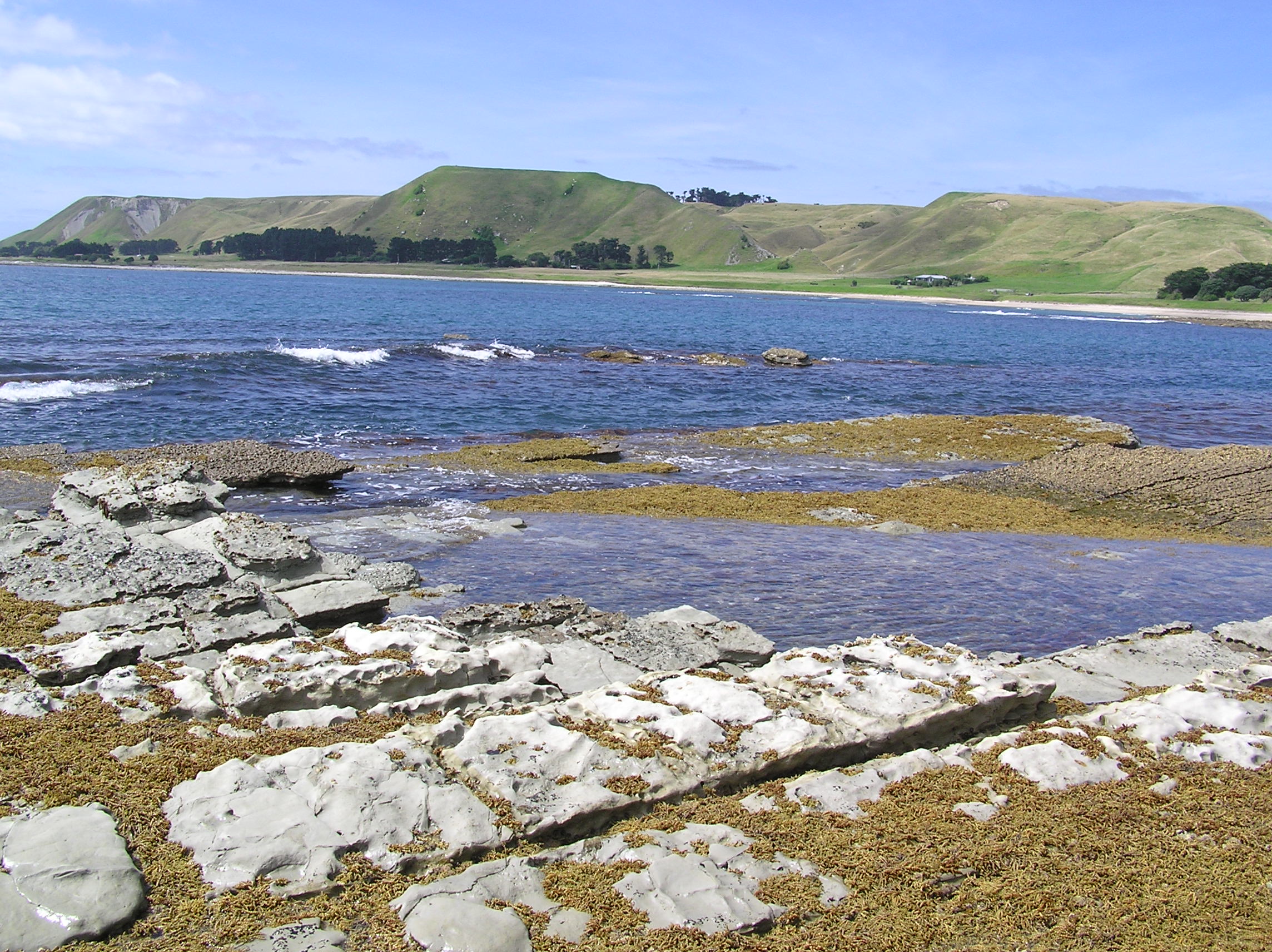
A rugged sliver of tide pools
Finding a “remote sliver of rugged farm land surrounded by the southern Pacific Ocean,” and close enough to Gisborne, as Murray notes, to drive there for dinner and a movie and back to the rural wave rich confines in the dark is not to difficult. We drove there from Gisborne in the late afternoon, after unsuccessfully attempting to have our back door lock on the van fixed, drove around the determined sliver of land, before settling on a sunset roadside pullout with some offshores holding up ridable wave lines breaking off the high tide reefs front and center. A sign of morning wave harvests? No. The winds shifted and shafted the swell, gusting all over the place. We explored the community for the next couple of days, growing increasingly frustrated with the weather and lack of swell. Having been in New Zealand for a month now, and not having found any decent surf was becoming a problem. Patience and outlooks growing dim. Romantic visions disappearing with each cross shore gust of schizo wind blow and undeveloped swell predictions. Throwing a bit of salt into our ant bites and mozzie bumps, the WWOOF hosts we had called were not taking any travelers. Fuck! So we head further south, deep into the Wairoa district, and down beach access roads that lead to waveless coastal landscapes. After waking up in Napier, a seaside resort community/shipping harbor town on the south end of Hawkes Bay, we decide to go cross country and head for the Taranaki region after speaking to a WWOOF host who enthusiastically accepted our offer of hands on dirt digging skills on her property. The van struggled its way over the mountain passes, radiator sucking water fast as the altitude gained on us and the air thinned, but we quickly moved east to west, hoping to scream down the other side of the country and straight into some surf. At Lake Taupo, we were entertained by yet another resort community, and offered me quite a bit of reflection on the reading I’ve been doing on the Tourist Gaze. These communities of Napier and Taupo are progeny of the seaside resorts that sprang up in Great Britian during the Industrial Revolution. For Europeans during the 19th century, the ocean was still a place to fear. There was no romantic idolization of the vast horizon, or joy found in playing in the ocean’s underworld. A growing community from the upper classes were discovering mind and body health benefits from soaking in ocean though, travelling from their inland urban centers to the rural seaside outposts to “take the Cure” that the oceans saltwaters and medical staff provided at exclusive health centers. As new romantic visions of the natural world were published in poetry and prose forms, and combined with increased publishing abilities of the infantile modern era, growing working/middle class mobility and affordable mass transportation through the improved rail road systems, the tourism industry boomed and the ocean became a magnet for fun and sun and escape from the wonderful world of full time employment and the prudish conservatism of the Victorian household moral system. The natural landscape was quickly developed at these resort communities, as entrepreneurs set up industry that would, ironically, provide all the comforts of home and bring drastic change to the rural communities being invaded by the beast of modernity. Where once the Tourist Gaze was set upon the natural landscape, it becomes centered on the developed man over nature attractions – the posh restaurants, bungy jumps, poolside bar service, or nightly entertainment. And that is what we see today in places like Napier and Taupo. Grotesque bodies of development and convenience, that attract international crowds through tourist marketing of pre-packaged vacations that promise to erase the stress and mundaneity of one’s everyday existence. These resort communities make travel easy, but create(d) ever evolving social dynamics between the tourist and the host (people and landscape). The surf world has been developing its own resort community infrastructure for the past several decades now, and that is something that I’m beginning to look into with my thesis research as well. My initial forays into surf culture, while backpacking down the coast of Mexico ten years ago and working at a “surf resort” north of Zihuatanejo without any knowledge of surf history or culture whatsoever has been a fundamental inspiration and experiential research starting point for this project and for my life in general. I’ve seen the positives and the negatives from environmental and social perspectives, and I’m really filling in the gaps with the readings I’ve been doing on this trip. I just read an excellent piece by Steve Barilotti, a long time Surfer magazine photojournalist and editor, published in 2002, about the state of affairs in Bali and other Indonesian surf tourist hotspots that he’s been travelling to for years. Since Europeans began setting up their colonial tourist settlements here in the 1930’s, life for the locals has been a mad capped plunge into the Western vision of civilization and a story of cultural adaptation for better or for worse that has led to a huge sex industry, environmental pollution and increased crime. Long story short- and please understand that these posts are blurbs of idea’s and quickly typed ruminations in the form of a travelogue that will be developed in much greater coherency in my thesis-we all need to be taking a step back and reflecting a bit on the world we are creating and promoting through our travel experiences. Who and how are we affecting our host communities while on our privileged excursions around the world are questions we all need to ask ourselves. Whether on a surf trip, or just a family vacation to Mazatlan over Christmas break, a lot of our collective choices are doing more harm than good unfortunately, but there are alternatives and better ways to interact and support your local hosts.
The wind is again howling. Mt Taranaki is shrouded by a dense cloud blanket. Christine has been packing up the van and making a couple mugs of tea, as I ramble on. We are heading back up the coast to northern Taranaki to WWOOF on another homestead/organic farm in Urenui for at least a few days. There is some swell on the horizon, and this area is, like most areas of New Zealand, known for producing beautiful wave formations off the point breaks and river mouths and reefs that are found around every bend in the road. And this road is named the “Surf Highway”. This time its on. New Zealand, start throwing up some of those gems. Please! Not that this is a trip centered around surfing or anything…
p.s. Got the van stuck again yesterday. Looking for surf in all the wrong places, tried to turn around at another dead end, and backed up into a little grassy ditch just big enough for our vans tires. The wet grass wouldn’t let our tires get a grip and we had to rely on the kindness of a neighbor to help tow us out with his Rav 4. Thanks Rodney! Sorry to wake you from your late night beer fest at 11am, but cheers for jumping at the chance to help us out and for offering us your shower too! No thanks to the man with one leg who didn’t have a phone and only offered us berations for “driving crazy” and other dickish advice. Get bent dude.
 new surf dialogue
Leave a comment